
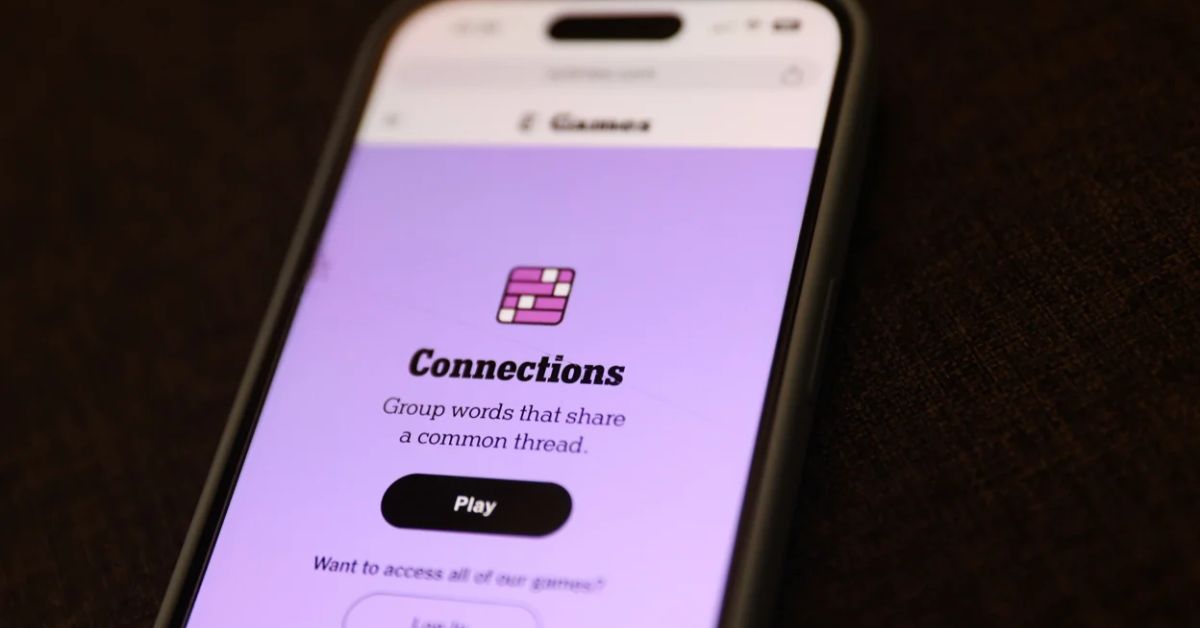
If you are searching for the connections hint mashable players use to get through a tricky daily grid, you are probably looking for more than just the final answers. NYT Connections can look simple at first, but the real challenge comes from spotting the intended relationship between words that seem to belong to several different groups.
For Monday, September 14, 2026, Connections is puzzle #1191. The grid includes words such as STRAW, CRAB, COOT, LEMON, BLUE, CANARY, TEAL, RAT, LOON, BAG, WHEAT, CUTLERY, SNITCH, GOOSE, STIRRER, and STOOLIE. The published solution groups them into waterbirds, informants, common single use plastic items, and words that can precede GRASS.
This guide explains today’s clues and answers while also showing how to approach future Connections puzzles. You will learn how difficulty tiers work, why misleading words cause mistakes, how word association helps, and how daily solving can improve your pattern recognition.
Mashable Connections Hint Today: Clues and Answers
The Connections format asks you to divide 16 words into four groups of four. Every group has a shared connection, but the game deliberately includes words that can appear to fit more than one category. That overlap is what makes the puzzle more difficult than a basic vocabulary quiz.
For today’s puzzle, the first clue is aquatic fowl, which points toward waterbirds. The second clue is tell tale, suggesting a person who provides information. The third clue is disposable things, while the final clue asks you to think of words that can be followed by GRASS. These hints give you a useful path without immediately revealing every word.
If you want the complete solution, today’s four groups are:
- Waterbirds: COOT, GOOSE, LOON, TEAL
- Informant: CANARY, RAT, SNITCH, STOOLIE
- Common single use plastic items: BAG, CUTLERY, STIRRER, STRAW
- ____GRASS: BLUE, CRAB, LEMON, WHEAT
The final category is especially useful to understand because the words do not form a normal category by themselves. Instead, adding GRASS creates familiar terms such as bluegrass, crabgrass, lemongrass, and wheatgrass.
Strategies for Decoding the Grid
Start by scanning the entire board instead of immediately submitting the first four words that look related. Connections rewards careful comparison. A word may have two possible homes, but only one arrangement will leave the remaining tiles with equally strong relationships.
One useful method is to identify the most specific connection first. If four words clearly belong to a narrow category, test them mentally before submitting. For example, COOT, GOOSE, LOON, and TEAL may look like general bird names. However, recognizing that all four are waterbirds makes the relationship much stronger. Today’s puzzle demonstrates why the exact wording of a category matters.
Another strategy is to look for word patterns rather than meanings. The purple group in today’s game is a good example. BLUE, CRAB, LEMON, and WHEAT do not immediately seem related. Add GRASS after each one, however, and the pattern becomes clear. This type of word completion is common in Connections and often appears in the harder categories.
Understanding the Difficulty Tiers
Connections uses four difficulty levels. The colors traditionally progress from yellow as the easiest to green, blue, and purple as the most difficult. The colors are not simply decorative. They indicate how direct or indirect the intended relationship tends to be.
Yellow groups usually involve familiar categories or straightforward meanings. Green may require a little more knowledge. Blue often uses a more specific association, while purple frequently depends on wordplay, phrases, spelling patterns, or an unexpected interpretation. Still, the order is not a guarantee that every player will find yellow first.
Today’s puzzle shows why personal knowledge matters. A player familiar with birds may quickly notice COOT, GOOSE, LOON, and TEAL. Someone more familiar with everyday products might spot BAG, CUTLERY, STIRRER, and STRAW immediately. Meanwhile, another player may see the ____GRASS group before either of them. The intended difficulty is useful, but your own background can change the experience.
Common Pitfalls to Avoid
The biggest Connections mistake is accepting a group because four words seem related. The game is designed to create tempting false connections. A word can have a perfectly reasonable relationship with three other tiles and still belong somewhere else.
Today’s board provides several examples. GOOSE is clearly a bird, but the word can also form GOOSEBERRY. BLUE and WHEAT can likewise participate in other word combinations. That creates uncertainty until the remaining tiles reveal the stronger structure. A good solver therefore asks, “What else could this word mean?” before locking in a group.
Another common problem is unfamiliar vocabulary. STOOLIE, for example, may not be familiar to every player. It is a slang term for an informant, which places it alongside CANARY, RAT, and SNITCH. When a word looks unfamiliar, do not automatically assume it is irrelevant. Its less common meaning may be exactly what the puzzle expects you to recognize.
Utilizing External Resources
Using an outside hint does not automatically ruin the experience. The important question is how much assistance you use. A gentle clue can help you continue solving without removing the challenge, while a complete answer sheet reveals the entire puzzle.
For players who search phrases such as connections hint mashable, the best approach is to use hints progressively. Start with a broad clue. If that does not work, look for the category. Only reveal the four answers when you are genuinely stuck or want to check your completed board.
External resources can also help you learn. If you discover that TEAL is a waterbird or that STOOLIE means informant, you have gained vocabulary that may help with a future puzzle. Today’s published guide confirms that these less obvious meanings are part of the intended solution.
However, always check the date when searching for a daily answer. Connections refreshes every day, and different sites may show yesterday’s puzzle depending on when their pages were updated. A current page for September 14 should not be confused with the September 13 game.
The Role of Word Association
Word association is one of the most important skills in Connections. You are not simply matching synonyms. You are searching for relationships involving meanings, phrases, categories, cultural references, word endings, and other patterns.
Consider today’s purple group. BLUE, CRAB, LEMON, and WHEAT have no obvious shared meaning. Yet each can combine with GRASS. Once you identify one or two examples, the rest becomes easier to recognize. This is a classic word association technique: find the common bridge rather than forcing the words themselves to be directly related.
The same principle works with the plastic items group. BAG, CUTLERY, STIRRER, and STRAW become connected when you think about their common single use plastic versions. Instead of asking what each word means independently, ask what feature they share in the context of the puzzle.
Tracking Your Progress Over Time
Keeping track of your results can make daily puzzle solving more useful. You do not need a complicated spreadsheet. Simply notice how often you solve without mistakes, which category types cause problems, and whether you tend to rush your first guess.
Your mistakes can reveal patterns. If you regularly miss wordplay categories, spend more time checking prefixes, suffixes, compound words, and phrases. If cultural references give you trouble, pay attention to entertainment, sports, geography, and common American expressions while solving.
It is also helpful to remember difficult words. Today’s STOOLIE is a good example. Once you learn that it can mean an informant, seeing it in a future puzzle may immediately trigger a useful association. Over time, these small discoveries build a larger mental library.
Benefits of Daily Puzzle Solving
Daily word puzzles offer a simple way to practice flexible thinking. Connections requires you to shift between literal meanings, categories, phrases, and word structures. That constant switching can make the game feel more like a reasoning exercise than a basic vocabulary test.
The game also encourages restraint. You may find three words that seem certain, but the fourth can remain unclear. Instead of guessing immediately, you learn to wait and examine the entire board. That habit of checking alternatives is useful whenever you are solving a problem with incomplete information.
There is also a social element. Players often compare their results, discuss difficult clues, and share strategies. That makes a daily puzzle a small routine rather than a one time challenge. The important point is to treat the score as feedback, not as a measure of intelligence.
Frequently Asked Questions
How often are the puzzle categories updated?
NYT Connections receives a new puzzle each day. A new game appears at midnight in the player’s local time zone, so the date can differ depending on where you are playing.
What should I do if I get stuck on the last group?
Remove the groups you have already confirmed and examine the remaining four words. Look for prefixes, suffixes, compound phrases, wordplay, or a shared missing word.
Are there specific themes that appear more often?
There is no fixed public list of recurring categories that guarantees an answer. However, Connections can use common categories, cultural references, phrases, synonyms, word patterns, and other forms of wordplay.
Is it cheating to look up a hint?
Not necessarily. A small hint can preserve most of the solving experience. If you want the challenge to remain intact, reveal only a category clue before checking the complete answers.
Can I play older puzzles?
Availability depends on the platform and its archive options. Third party Connections archives can also provide historical puzzles and solutions, although players should distinguish those resources from the official NYT Games experience.
Final Thoughts on Daily Success
The best way to approach Connections is to slow down before making a guess. Look for strong groups, but also search for alternative meanings that could make a word fit somewhere else. Today’s puzzle is a good demonstration because words such as GOOSE, BLUE, and WHEAT can point toward misleading associations before the intended groups become clear.
If you searched for a connections hint mashable style guide because today’s grid was difficult, the key lesson is simple: use hints as stepping stones rather than shortcuts. For September 14, the answers are WATERBIRDS, INFORMANT, COMMON SINGLE USE PLASTIC ITEMS, and ____GRASS. Once you understand why those groups work, you are better prepared for the next grid. Daily practice, careful elimination, and attention to wordplay will usually do more for your results than simply memorizing answers.

Sophia Mitchell is a US-based author known for inspiring stories blending emotion, clarity and modern themes of life, hope and growth worldwide bio