

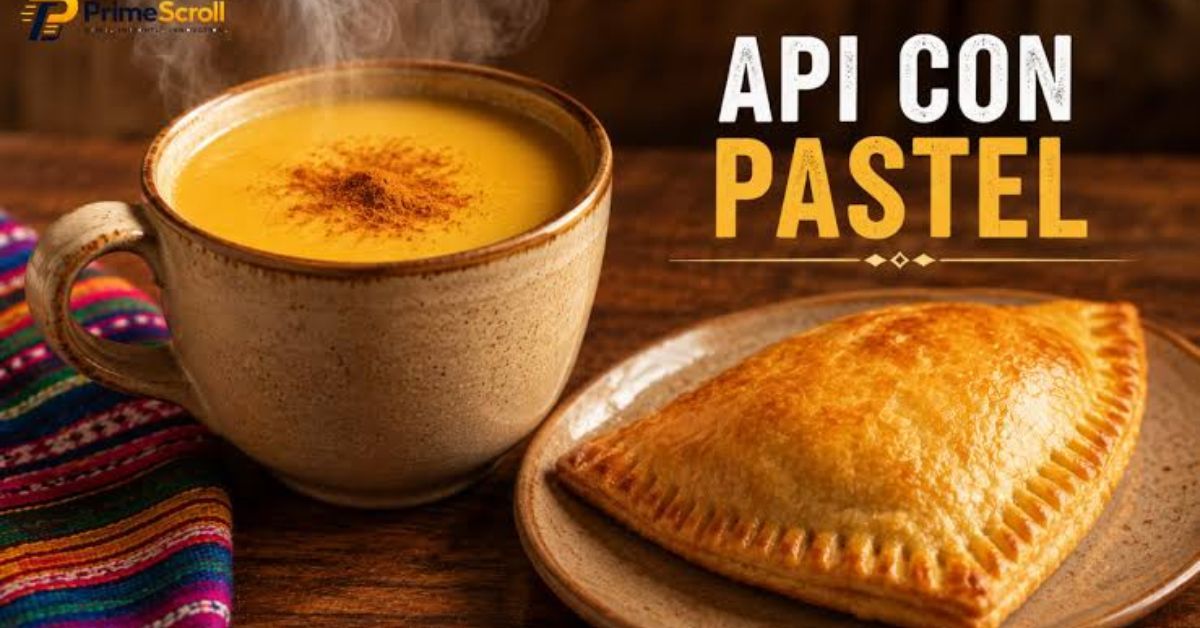
Searching for best api con pastel near me can lead to a surprising problem: this classic Bolivian breakfast is far less common in the UK than dishes such as empanadas, arepas, or tacos. If you know what you are looking for, however, you can narrow the search considerably. Api con pastel combines a hot, thick corn drink with a crisp fried pastry, usually filled with cheese. It is especially associated with the Bolivian highlands and traditional morning food.
This guide explains exactly what api con pastel is, where to look for it in the UK, and why ordinary restaurant searches can miss it. You will also learn how to judge the api and pastel themselves, how the dish differs from a standard empanada, whether it can be vegetarian, and what to do if there is no confirmed option close to you.
Best Api con Pastel Near Me: A Complete UK Search Guide
If you are searching for the best api con pastel near me, start with the cuisine rather than the dish alone. Search engines and delivery apps may not index every breakfast item separately. A restaurant may serve Bolivian food while listing only its better known dishes online.
For UK searches, London is the clearest place to investigate first. Current restaurant listings identify Jenecheru on Old Kent Road as a Bolivian restaurant, while another current listing specifically mentions api con pastel among its traditional breakfast options.
There is an important distinction between a restaurant being associated with the dish and having it available today. Menus change, breakfast specials may be limited to certain days, and delivery menus can differ from dine in menus. Therefore, check the restaurant’s current menu or contact the restaurant before making a long trip.
Useful searches include Bolivian restaurant near me, Bolivian breakfast UK, api con pastel London, Bolivian bakery near me, and pastel con queso Bolivia. These variations can uncover businesses that do not use the exact phrase in their main listing.
What exactly is api con pastel?
Api con pastel is a traditional Bolivian breakfast pairing. The api is a hot, sweet corn based drink, commonly made with purple corn and flavored with ingredients such as cinnamon, cloves, and citrus peel. Its texture is thicker than an ordinary fruit drink because the ground maize contributes starch and body.
The pastel is a thin pastry that is generally filled with cheese, folded, sealed, and deep fried. It is often finished with powdered or icing sugar. The contrast is central to the dish: warm, sweet, spiced api accompanies a crisp pastry with a salty cheese center.
The dish has strong connections with Bolivia’s Andean food culture. Sources describing Bolivian breakfast traditions commonly associate api with places such as La Paz and Oruro, where hot api and fried pastries are particularly suited to cool mornings. Oruro sources also describe pastel as a traditional accompaniment to api.
You may also encounter api morado, made with purple maize, or api blanco, made with lighter maize. Some traditions combine the two, creating a two color drink known as api combinado.
Where can you find api con pastel in the UK?
The biggest challenge is availability. Api con pastel is a specialized Bolivian breakfast rather than a standard item on most British café menus. Consequently, searching broadly for South American restaurants can produce many irrelevant results.
London is currently the most useful UK location to investigate because it has an established Bolivian food presence. Jenecheru on Old Kent Road is a particularly relevant lead because multiple current sources identify it as a Bolivian restaurant. Companies House records JENECHERU LONDON LTD as an active company at 206 Old Kent Road, London SE1 5TY.
However, availability should be confirmed. A current restaurant listing describes api con pastel as a traditional breakfast option at Jenecheru, while its current Uber Eats listing does not visibly show api con pastel on the delivery menu.
That difference matters. A breakfast dish can be served in person without appearing on a delivery platform. It may also be offered only on weekends or at particular times. For that reason, calling ahead is more reliable than assuming a search result means the dish is available right now.
Outside London, use the same strategy. Search for Bolivian restaurants, Bolivian community events, Latin American bakeries, and specialist food markets. Small businesses sometimes promote individual breakfast specials through social media rather than large restaurant directories.
Jenecheru, London: the strongest current lead
Jenecheru London Bolivian Restaurant is currently the most clearly documented UK lead for someone specifically investigating api con pastel. The restaurant is located at 206 Old Kent Road, London SE1 5TY, and current listings identify it as a Bolivian or South American restaurant.
A current Wanderlog listing specifically describes api con pastel as one of Jenecheru’s traditional breakfast options. The listing also gives its location and current opening information, including earlier weekend opening than some weekdays.
At the same time, the restaurant’s current Uber Eats listing shows a broader Bolivian menu without visibly displaying api con pastel. This is why Jenecheru should be treated as a strong lead rather than a guarantee of same day availability.
If you are traveling from another part of the UK, contact the restaurant first. Ask specifically, “Do you serve api con pastel today?” If you want the traditional pairing, also ask whether the api is served with a freshly fried cheese pastel.
The restaurant’s listed telephone number is +44 7872 475816, and current business listings place it on Old Kent Road.
Why “near me” searches for this dish can be difficult
The phrase near me sounds precise, but it does not guarantee that search engines know about every specialty dish served locally. A restaurant might be categorized as Latin American, South American, Brazilian, or simply a café even when it has Bolivian dishes.
The wording creates another problem. The dish may be listed as api con pastel, pastel con api, api y pastel, or even described separately as api and cheese pastry. A search for only one spelling can therefore miss relevant results.
Delivery platforms create another layer of uncertainty. Their menus are designed around delivery demand and may omit breakfast items, temporary specials, or dishes that are primarily served in person. Jenecheru is a useful example because current third party information mentions api con pastel while the visible delivery menu does not.
For U.S. travelers visiting Britain, the best approach is to combine Google Maps style searches with restaurant websites, social media pages, and direct calls. Treat a search result as a lead, not automatic proof that the dish is available.
How to tell whether you have found a good one
A good api con pastel should make sense as a pair. You are not simply looking for a sweet corn drink and an unrelated fried pastry. The traditional experience depends on the contrast between the hot, thick api and the crisp pastel.
Look at the api first. It should have noticeable body rather than resembling a thin purple juice. Purple api commonly has a deep color and may carry aromas of cinnamon, cloves, or citrus. Recipes and descriptions of the dish consistently emphasize its warm, spiced character.
Then examine the pastel. A traditional cheese pastel is thin, fried, crisp, and usually filled with cheese. It may be dusted with sugar, producing a sweet and salty combination that works especially well beside the spiced drink.
Freshness matters more than presentation. A perfectly shaped pastry that has been sitting for hours may be less satisfying than a slightly rustic pastel fried shortly before serving.
The api should be hot and noticeably corn based
Api is not simply a purple flavored beverage. Traditional descriptions identify it as a hot drink made from maize, often purple maize, with a noticeably thicker consistency than ordinary juice.
The drink can contain cinnamon, cloves, sugar, and citrus peel, although recipes vary. Some versions are made from ground purple maize, while others use maize flour or related preparations. This creates variation in thickness and flavor without changing the basic identity of the drink.
Temperature is also part of the experience. Api is traditionally consumed hot, particularly as a warming breakfast in the Bolivian highlands. Sources describing the dish consistently connect it with cold mornings and early market food.
Do not expect the flavor to resemble a conventional corn soup. Sweetness, spice, and maize create a distinctive breakfast drink. If you have only tried cold purple corn beverages, api can feel completely different because of its heat and thicker texture.
The pastel should be freshly fried
Fresh frying is one of the easiest ways to distinguish a traditional style pastel from a generic packaged pastry. The dough is rolled thin, filled, sealed, and fried until it becomes crisp and puffy. Bolivian recipes commonly describe cheese as the filling and sugar as a finishing touch.
The ideal texture is crisp outside and soft inside. Cheese should remain present rather than becoming completely lost inside a thick layer of dough. A light dusting of sugar can add another layer of contrast.
Timing matters because fried pastry changes quickly. A pastel that sits around can lose its crisp exterior and become heavier. For that reason, ask whether the pastry is made to order or fried fresh.
If you are eating at a restaurant that specializes in Bolivian food, you can also ask whether the pastel is pastel con queso. That wording makes your request clearer if the menu has several pastry options.
Ask for both together
If your goal is the traditional breakfast, do not search for api and pastel as completely separate foods. Ask specifically for api con pastel or pastel con api.
This matters because a restaurant may offer a corn drink without serving the fried pastry, or it may sell a cheese pastry without serving api. The combination is what makes the breakfast recognizable as api con pastel.
When calling a restaurant, a simple question works well: “Do you serve Bolivian api con pastel, with the hot corn drink and fried cheese pastel?” This removes ambiguity and saves you from ordering two unrelated items.
If the staff says the dish is available only on certain mornings, ask what time they begin serving it. Traditional breakfast foods can have different schedules from lunch and dinner menus.
For visitors, this small amount of planning can make a major difference. A restaurant may be open all afternoon but still not serve its traditional breakfast menu after the morning period.
Is pastel the same as a normal empanada?
Not exactly. A Bolivian pastel can look similar to an empanada because both involve dough surrounding a filling. However, the preparation, texture, filling, and serving style can differ.
Pastel con queso is commonly described as a fried cheese pastry made from a thin dough. It is fried until it puffs or becomes blistered and crisp, then may receive a dusting of sugar.
Empanadas are a much broader category found throughout Latin America and beyond. They can be baked or fried and may contain meat, cheese, vegetables, or other fillings. A Bolivian salteña, for example, is different again, with a distinctive juicy filling and thicker baked shell.
So, if a British restaurant lists only “cheese empanada,” do not automatically assume it is the same as a Bolivian pastel served with api.
What does api con pastel taste like?
Api is usually sweet, warm, earthy, and spiced. Purple maize gives the drink its deep color, while cinnamon and cloves can provide a noticeable aromatic layer. Depending on the recipe, citrus peel can add brightness.
The pastel brings the opposite texture. Its fried exterior is crisp while the cheese filling provides saltiness and richness. Sugar sprinkled over the pastry creates an unusual sweet and savory contrast.
Together, the two components balance one another. The drink is soft and warming, while the pastry is crunchy and substantial. The combination can be especially appealing if you enjoy foods that mix sweet and savory flavors.
Do not expect api to taste like grape juice simply because it is purple. Its maize base and warm spices give it a much more grain based, cooked flavor.
Is api con pastel vegetarian?
It can be. The traditional cheese filled pastel is commonly vegetarian when made with cheese, flour, and vegetable oil or another suitable frying fat. Several descriptions of api con pastel identify the cheese pastry version as a vegetarian breakfast.
However, you should still ask. Recipes and restaurant menus vary, and frying oil may differ. Some versions of pastel use meat fillings, while other variations can include ingredients that do not fit a particular vegetarian diet.
The api itself is generally made from maize, water, sugar, and spices, so the drink is not inherently meat based.
For vegans, the situation requires more checking because the pastel may contain cheese, butter, lard, or other animal derived ingredients depending on the recipe. If you have a strict dietary requirement, ask the restaurant about every ingredient rather than relying on the word “vegetarian” alone.
What if there is nowhere nearby serving it?
Do not assume that a lack of search results means the dish is unavailable throughout the UK. Specialty foods often have a smaller digital footprint than mainstream restaurant dishes.
First, expand your search from the exact phrase to related terms. Try Bolivian food near me, Bolivian restaurant UK, pastel con queso Bolivia, api morado, and Bolivian breakfast. Then check whether the restaurant has a social media page where daily specials are posted.
Second, look for Bolivian community events. Cultural festivals and Latin American food events can sometimes offer dishes that are not part of a restaurant’s permanent menu. Api con pastel has a strong cultural connection with Bolivian festivals and traditional food settings.
Finally, consider making it at home. Purple maize or purple maize flour may be available through Latin American grocery stores, while the pastry can be prepared with flour and a firm white cheese. Traditional recipes provide a useful starting point, although homemade versions will vary by region and family.
The best way to search right now
For the most accurate best api con pastel near me search, use a layered approach rather than relying on one Google result. Start with the exact phrase, then search for Bolivian restaurants in your target UK city.
If you are going to London, investigate Jenecheru on Old Kent Road first because current sources document it as a Bolivian restaurant and a current restaurant listing specifically mentions api con pastel.
Before traveling, verify the dish directly. Current online menus do not consistently display api con pastel, so a phone call or direct message can prevent a wasted trip. The restaurant is listed at 206 Old Kent Road, London SE1 5TY.
For searches outside London, use the same formula:
- Search for Bolivian restaurants rather than generic Latin restaurants.
- Add the name of your UK city.
- Search both api con pastel and pastel con api.
- Check breakfast and weekend menus.
- Look at recent social media posts.
- Contact the restaurant before visiting.
- Ask specifically whether both components are available together.
This approach is more reliable because it separates finding a restaurant from confirming a specific dish.
FAQs
Where can I find api con pastel in London?
Jenecheru on Old Kent Road is a current documented lead. Its third party listings mention api con pastel, but availability should be confirmed before visiting.
What is Bolivian api con pastel made from?
Api is commonly made from maize, often purple maize, with sugar and spices. The pastel is usually a fried wheat pastry filled with cheese.
Is api con pastel the same as an empanada?
Not quite. The pastel resembles a fried cheese empanada, but its preparation and traditional pairing with hot api make it a distinct Bolivian breakfast.
Is api con pastel vegetarian?
A cheese filled pastel with a maize based api can be vegetarian, but ingredients vary. Always confirm the filling, frying fat, and preparation with the restaurant.
How do I find api con pastel near me in the UK?
Search for Bolivian restaurants using both “api con pastel” and “pastel con api.” Then verify current availability directly because specialty breakfast items may not appear on delivery menus.
Conclusion
Finding the best api con pastel near me in the UK requires more than a simple restaurant search. This is a traditional Bolivian breakfast built around two specific elements: hot, thick, spiced maize drink and a freshly fried pastry, commonly filled with cheese.
For UK searches, London currently provides the clearest documented lead, with Jenecheru on Old Kent Road specifically associated with traditional Bolivian breakfast options including api con pastel. However, online menu information is not completely consistent, so contacting the restaurant before traveling is the safest way to confirm availability.
If there is no confirmed option nearby, broaden the search to Bolivian restaurants, cultural events, Latin American markets, and specialist food shops. With the right search terms and a little verification, this distinctive Bolivian breakfast becomes much easier to find.

Sophia Mitchell is a US-based author known for inspiring stories blending emotion, clarity and modern themes of life, hope and growth worldwide bio