

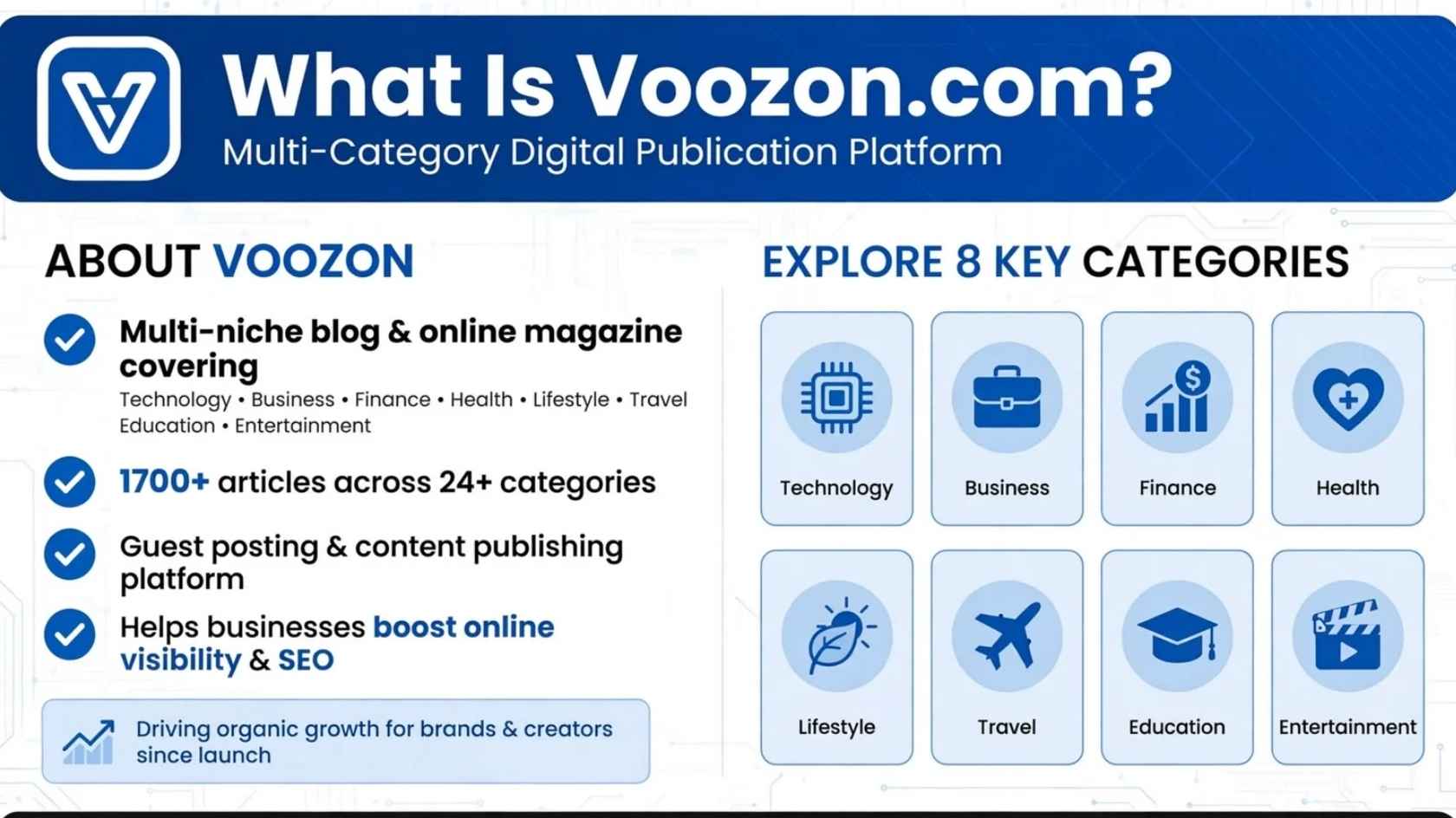
Finding reliable websites for publishing content is an important part of digital marketing. Businesses, bloggers, and SEO professionals often look for platforms that help them reach new readers, build brand awareness, and earn relevant backlinks. Voozon.com is a name that may appear during searches for online publishing, guest posting, and content marketing opportunities. However, understanding a website’s actual purpose is essential before investing time or money in it.
This guide explains Voozon, how a publishing platform may operate, and what marketers should consider before using it. It also explores guest posting, search engine optimization (SEO), topical relevance, editorial standards, and backlink quality. Because a platform’s features, ownership, and publishing policies can change, readers should verify current details directly rather than rely on unconfirmed claims. By the end, you will have a practical framework for evaluating Voozon.com and deciding whether it fits your content marketing goals in 2026.
What Is Voozon?
Voozon.com is the website name at the center of this discussion. To understand its role accurately, readers should first examine its current homepage, published articles, About page, editorial guidelines, and contact information. These details can help establish whether it operates as a general content website, a niche publication, a guest posting destination, or a service with a different purpose. Without verified information from reliable sources, it would be misleading to assign the platform a specific business model or claim that it offers services that may not exist.
For marketers, the key question is not simply what a website calls itself. The more important issue is whether its content, audience, and publishing practices support a clear purpose. A useful publishing website normally provides accessible articles, consistent subject coverage, and enough editorial information for contributors to understand its standards. Readers should also look for original reporting, author details, working links, and a clear way to contact the publisher.
Before working with Voozon, review the available evidence. Check whether the site has recent posts, whether those posts provide practical information, and whether the authors or editors are identifiable. Look for signs that the website serves real readers instead of publishing large volumes of unrelated promotional articles. These checks provide a more dependable basis for evaluating the platform than assumptions based on its domain name or third-party SEO metrics.
How the Platform Works
The way Voozon.com works should be established through its current website and any published submission or service policies. If the site accepts guest contributions, its process may involve selecting a relevant topic, preparing an original article, submitting a draft, and waiting for editorial review. The publisher may request changes before accepting the article. However, these are common steps for guest publishing, not confirmed details of Voozon’s specific process.
A professional publishing process should explain what contributors can submit, how articles are reviewed, and whether publication involves a fee. It should also clarify who owns the content, whether links are permitted, and whether published articles can be edited or removed later. Clear rules reduce misunderstandings between publishers, writers, and businesses seeking exposure.
If you are considering a submission, start by reading the website carefully. Compare its recent articles with the topic you want to cover. If contact details are available, ask direct questions about editorial review, publication timelines, link policies, and any charges. Keep written records of agreements. Most importantly, do not assume that a website accepts guest posts simply because it appears in a search result or is mentioned in a backlink marketplace.
What Topics Does It Cover?
A website’s subject coverage helps reveal its intended audience and editorial focus. To determine what Voozon.com covers in 2026, review its article categories, navigation menu, recent posts, and archive pages. Look for repeated themes rather than relying on one or two articles. Consistent coverage can indicate that a website serves a recognizable readership, while a mixture of unrelated subjects may require closer inspection.
Common topics found across digital publishing websites include technology, business, marketing, lifestyle, finance, health, education, and entertainment. These examples describe the wider publishing landscape; they should not be treated as a verified list of Voozon’s categories. The actual subject range must come from the site’s visible content. Check whether articles offer useful explanations, cite dependable sources when needed, and provide enough depth to answer readers’ questions.
Topic consistency matters because visitors usually arrive with a specific need. Someone reading a technology guide expects information related to technology, while a business owner may want advice on marketing or operations. When a website serves a clear audience, contributors can create content that fits existing reader interests. This makes it easier to judge whether a potential publishing opportunity is relevant to a brand and worth pursuing.
Why Guest Posting Attracts Marketers
Guest posting allows a writer or business to contribute an article to another website. When the publisher has an engaged and relevant audience, the article can introduce the contributor to people who may not otherwise discover the brand. A well-prepared guest article can explain a useful concept, answer a common question, or share experience that readers can apply to their own work. The main value comes from helping an established audience, not merely placing a link.
Marketers also use guest contributions to build professional relationships. Working with editors, subject experts, and industry publications can create opportunities for future collaborations. A thoughtful article may bring referral traffic, strengthen brand recognition, and help readers understand a company’s expertise. These outcomes depend on the publication’s audience, the content’s quality, and the usefulness of the information provided.
However, guest posting can become ineffective when the main objective is acquiring backlinks at scale. Publishing the same promotional material across unrelated websites may reach few interested readers and create a weak brand impression. Search engines also evaluate links in context, so a placement should not be considered valuable simply because a website agrees to publish it. A better strategy is to choose relevant publications and provide original content that deserves attention.
Can Voozon Help With SEO?
Voozon.com could support an SEO campaign only if its actual publishing opportunities meet the campaign’s needs. Before reaching that conclusion, assess the website’s relevance, content standards, audience, and link practices. A domain name or a third-party authority score cannot establish that a backlink will improve rankings. Search visibility depends on many factors, including page usefulness, technical accessibility, competition, and the relationship between a page and the search query.
A relevant article may help a business reach interested readers and generate referral visits. It can also create a useful reference point when the article genuinely supports a claim or provides additional information. However, there is no reliable way to promise a specific ranking increase from a single placement. Search engines can ignore links, and a backlink may deliver little measurable value if the page receives no meaningful traffic or serves the wrong audience.
Google’s guidance on link spam is especially important when considering paid guest posts. Links created mainly to manipulate search rankings can violate spam policies. Paid placements should be disclosed appropriately, and qualifying attributes such as rel=”sponsored” or, where suitable, rel=”nofollow” help communicate the relationship. Before using Voozon for SEO, ask how links are handled and whether the publisher follows transparent practices. Sustainable SEO prioritizes useful content, relevant mentions, and a natural link profile over shortcuts.
The Importance of Topical Relevance
Topical relevance means that a website, article, and linked destination relate meaningfully to the same subject. For example, an article about business accounting published on a credible finance or small-business website may reach a more suitable audience than the same article placed on a site focused on unrelated entertainment. The closer the connection between the content and the reader’s needs, the easier it is to explain why the placement exists.
Relevance should be evaluated at more than one level. First, consider the website’s overall subject. Next, examine the specific article and its intended audience. Finally, review the linked page to see whether it adds useful information. A general website may still contain a relevant article, while a broadly related domain may publish an individual page that has little connection to the target destination.
When evaluating Voozon, compare its recent content with your business niche. A company selling accounting software, for instance, should look for meaningful coverage of finance, business operations, productivity, or related technology. The decision should be based on the actual article and audience rather than a broad category label. If the connection requires a lengthy explanation, the placement may not be a natural fit.
Content Quality Matters More Than Placement
A published article is not automatically valuable because it appears on another domain. Quality depends on whether the information is accurate, original, well organized, and useful to its intended audience. A strong contribution answers a real question, explains unfamiliar ideas in clear language, and gives readers practical next steps. It should also avoid unsupported claims, exaggerated promises, and unnecessary promotional language.
For Voozon or any other publishing opportunity, review existing articles before submitting content. Look for clear headings, meaningful examples, accurate facts, and consistent editing. Check whether articles repeat generic information or offer insights that readers can use. If a website publishes many thin articles with little editorial distinction, its suitability for a brand may be limited even when the publishing process appears simple.
Content quality also affects what happens after publication. Useful articles have a better chance of earning reader attention, generating relevant visits, and being shared naturally. No outcome is guaranteed, but strong content gives the placement a purpose beyond a backlink. Businesses should therefore invest in research, careful writing, fact-checking, and useful references instead of treating publication as the final goal.
Keep the Article Reader First
Begin with the reader’s question, not the brand’s sales message. Identify the problem the audience wants to solve and organize the article around a clear answer. Explain important terms, use specific examples, and make the information easy to scan. A reader should understand the main point without having to work through repeated keyword phrases or promotional claims.
Brand mentions and links should fit naturally into the discussion. If a product, service, or guide provides additional help, explain why it is relevant and link to the most useful destination. Avoid forcing exact-match keywords into every heading or paragraph. Search engines are designed to surface helpful information, so writing that serves readers first is a more durable approach than publishing text mainly to influence rankings.
How to Judge a Publishing Opportunity
Evaluating a publishing website requires more than checking its domain authority. SEO tools can provide useful estimates of backlinks, referring domains, organic search visibility, and ranking keywords. These metrics help compare websites, but they are not direct measurements of editorial quality or guaranteed ranking benefits. Third-party estimates may also differ from actual search traffic, so they should be treated as indicators rather than proof.
Start with a manual review. Confirm that the website publishes current material, provides a clear contact method, and maintains consistent editorial standards. Look at several articles, not just the homepage. Check whether author names, references, and publication dates are visible where appropriate. Search for signs of copied material, excessive advertisements, unrelated sponsored content, or links that appear designed primarily to pass ranking signals.
Next, consider commercial terms and the expected outcome. Ask whether publication is free or paid, whether the article will be edited, and whether any link attributes will be applied. Find out who controls the published page and what happens if the page is later updated or removed. Compare the cost with realistic benefits, such as audience reach, referral visits, and brand exposure. If a publisher guarantees rankings or promises unusually powerful backlinks, treat that claim with caution.
A simple checklist can help:
- Audience fit: Does the site reach people relevant to your business?
- Editorial quality: Are its articles original, clear, and well maintained?
- Topical fit: Does the proposed article match the site’s subject matter?
- Transparency: Are ownership, contact details, and publishing terms clear?
- Link practices: Are paid relationships disclosed and links qualified appropriately?
- Value: Does the opportunity offer benefits beyond a possible ranking change?
Strengths of the Platform
The strengths of Voozon.com should be assessed using observable evidence rather than assumptions. If its current pages provide useful articles, clear navigation, consistent subject coverage, and transparent editorial information, these characteristics could make the site easier for readers and contributors to evaluate. A focused publication may also give brands a practical setting for explaining a topic to an audience that already cares about it.
Another possible strength of a well-managed publishing website is accessibility. Clear submission instructions and responsive editorial contacts can make it easier for writers to understand requirements and prepare suitable content. An organized archive can help readers find related material, while accurate author information can support accountability. These are general signs of a professional publication, not verified claims about Voozon’s present features.
To determine whether these strengths apply, inspect the live website and record what you can confirm. Check article dates, editorial pages, author profiles, and contact options. If possible, review whether the site attracts relevant engagement or referral traffic. A balanced assessment should separate visible features from marketing claims. This approach allows businesses to recognize genuine advantages without overstating the platform’s reputation or performance.
Limits Marketers Should Understand
The main limitation when assessing Voozon.com is the need to verify its current status and services. A website’s content, ownership, publication policies, and availability can change. Search results may contain old references or incomplete descriptions, so they should not replace direct checks. If the site’s purpose is unclear or essential information is missing, postpone any paid commitment until the publisher provides satisfactory answers.
Another limitation is that publication alone does not guarantee traffic, authority, or improved search rankings. An article may receive little attention if it does not match reader interests or if the website has limited visibility. Even a relevant backlink may have no measurable effect on rankings. SEO tools cannot eliminate this uncertainty, and no responsible publisher can promise a specific Google ranking based solely on a placement.
Marketers should also consider financial and reputational risk. Paying for a placement without reviewing the page, audience, or link policy can waste a budget. Publishing low-quality content on unrelated websites may weaken brand credibility. Before agreeing to any service, confirm the price, deliverables, expected publication date, revision rules, and refund conditions. Keep claims realistic and avoid sharing sensitive account information with unverified providers.
Who May Benefit Most?
Businesses that publish educational content may benefit from guest posting when the target website reaches a relevant audience. For example, a small software company might contribute a practical guide about data security to a publication that regularly serves technology professionals. A marketing consultant could explain local search optimization to small-business owners. In both cases, the article provides useful information while introducing the contributor’s expertise.
Independent writers, subject experts, and digital agencies may also find value in suitable publishing partnerships. Writers can expand their portfolio, agencies can demonstrate subject knowledge, and companies can build relationships with editors. These benefits depend on the quality of the publication and the contributor’s goals. A site that offers no clear audience fit may not be worth pursuing, even if it accepts submissions quickly.
For anyone considering Voozon, the sensible approach is to define success before making contact. Decide whether the main objective is referral traffic, brand awareness, industry relationships, or a useful editorial mention. Then compare the website’s verified features with those goals. If the platform cannot demonstrate a relevant audience or transparent publishing practices, consider other publications that can provide stronger evidence of value.
Bottom Line
Voozon.com should be evaluated through its current content, publishing policies, transparency, and relevance to your goals. Its name alone does not establish whether it is a guest posting service, a content publication, or another type of website. Before using it, confirm what it offers, who manages it, and whether its articles serve a recognizable audience.
For SEO professionals and business owners, the most important lesson is to look beyond backlinks and domain metrics. Useful content, topical relevance, responsible link practices, and clear commercial terms provide a stronger foundation for decision-making. No website can guarantee better rankings simply by publishing an article. In 2026, a careful review of Voozon.com can help you decide whether it deserves a place in your content marketing strategy or whether another publishing opportunity is a better fit.
Frequently Asked Questions
1. What is Voozon.com used for?
Voozon.com is the website being evaluated in this guide. Check its current homepage, About page, and publishing policies to confirm its purpose and available services.
2. Is Voozon.com a guest posting website?
That status should be verified directly. Look for official contributor guidelines, submission instructions, or publisher confirmation before assuming that guest articles are accepted.
3. Can Voozon.com help improve Google rankings?
A relevant, useful article may support brand visibility and referral traffic, but publication does not guarantee better rankings. Link quality, context, and compliance with Google’s spam policies matter.
4. How can I check whether Voozon.com is trustworthy?
Review its contact information, editorial standards, author details, recent articles, and commercial terms. Be cautious of unsupported performance claims, unclear ownership, and guaranteed ranking promises.
5. What should I check before paying for a Voozon.com placement?
Confirm the total cost, target audience, article requirements, link attributes, publication timeline, and refund terms. Pay only when the opportunity provides clear value beyond a backlink.

Sophia Mitchell is a US-based author known for inspiring stories blending emotion, clarity and modern themes of life, hope and growth worldwide bio